Tell us about the job
Takes about a minute. No obligation.
Sizing a boiler for this house means accounting for what it will actually be asked to do each year. Homes in Richland County, SC run heat about five months a year, from November through March. The burner, the heat exchanger, and the ignition system all cycle through that full stretch, and a unit that is undersized or improperly commissioned shows the gap before the season is out. A contractor working an installation here will run a load calculation against the actual envelope of the house, not a rule-of-thumb figure, because an undersized boiler runs longer and harder to meet setpoint, accelerating wear on every component that cycles.
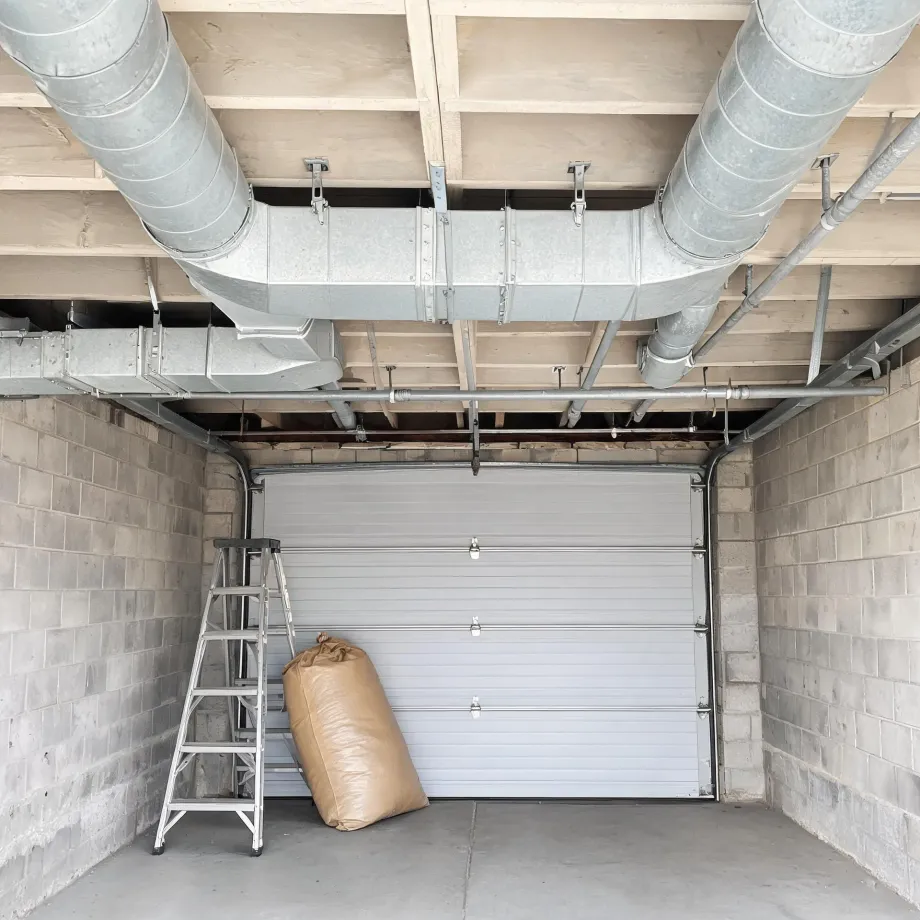
Existing ductwork and electrical service are what a boiler installation actually turns on, and in Richland County those two things were designed for whatever heated these houses originally, not for what a contractor is dropping in now. Half the homes in Richland County, South Carolina were built in 1989 or earlier (2020-2024 ACS 5-year). That gap between what the house was built to carry and what the new equipment asks of it is where the real scoping work happens. A contractor sizing a new boiler here has to confirm the existing distribution can handle it before the unit itself becomes the question.
What a Boiler Installation Puts in Your Home
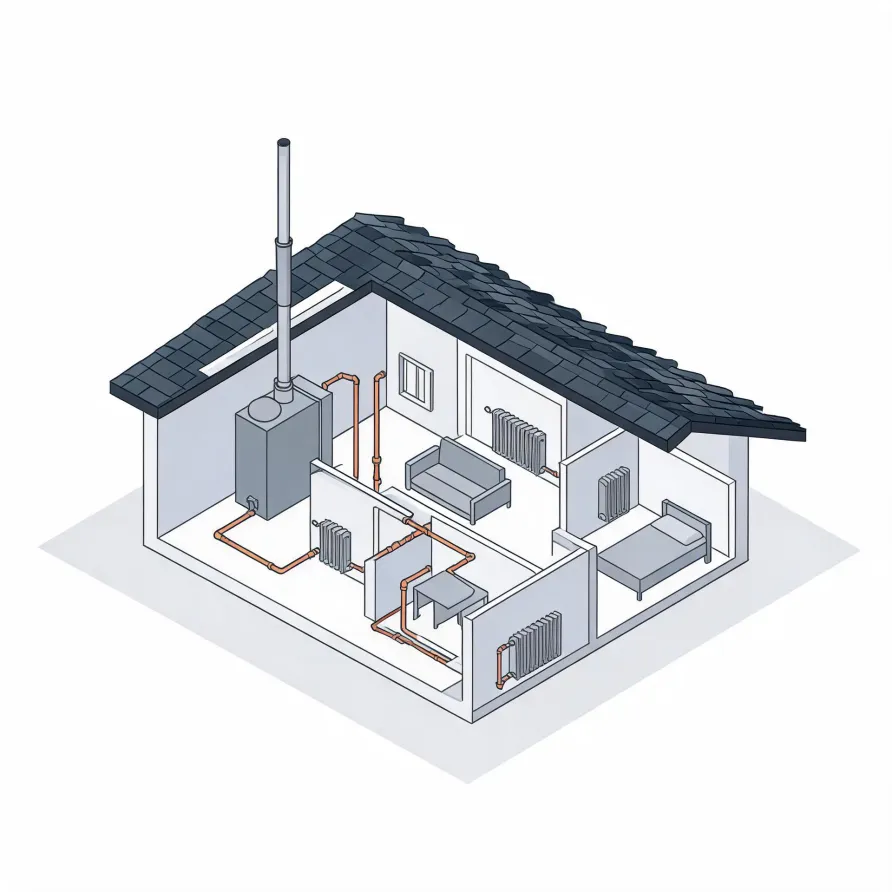
The boiler itself sits in a mechanical room, basement, or utility closet and is the unit that heats water for the whole system. Wall-mounted or floor-standing depending on the house, it connects to a flue or exhaust vent that runs to the exterior. That vent is part of what a contractor routes during the install.
From the boiler, supply and return pipes run to radiators or radiant floor loops positioned throughout the living spaces. A circulator pump, mounted directly on the piping near the boiler, moves water through those runs. An expansion tank and pressure relief valve sit close to the boiler as well, handling pressure changes as the water heats.
The drawing shows a typical layout, and a licensed contractor determines what fits the specific conditions of your home.
Get matched in Richland CountyRichland County, by the numbers
440 severe weather events were recorded in Richland County, South Carolina between 2015 and 2024.
NOAA National Centers for Environmental Information, Storm Events Database, bulk CSV export, events 2015-01-01 through 2024-12-31.Half the homes in Richland County, South Carolina were built in 1989 or earlier (2020-2024 ACS 5-year).
U.S. Census Bureau, 2020-2024 American Community Survey 5-Year EstimatesRichland County, South Carolina holds 187,611 housing units (2020-2024 ACS 5-year).
U.S. Census Bureau, 2020-2024 American Community Survey 5-Year EstimatesOwners occupy 60.3% of the occupied homes in Richland County, South Carolina (2020-2024 ACS 5-year).
U.S. Census Bureau, 2020-2024 American Community Survey 5-Year EstimatesCodes & Standards Governing Boiler Installation in Richland County, South Carolina1 sourced rules and standards
Licensing Rules for Richland County, South Carolina
South Carolina requires a mechanical contractor license for contracting work whose total cost of construction is greater than ten thousand dollars.
Severe Weather Events in Richland County
Weather in this region puts real demands on heating equipment, and those demands vary by where you live. A boiler sized and installed for local conditions holds up better and runs more efficiently than one spec'd to a generic standard.
440 severe weather events, 2015–2024. Source: NOAA National Centers for Environmental Information, Storm Events Database.