Tell us about the job
Takes about a minute. No obligation.
Sizing a boiler for Cherokee County starts with knowing exactly how long the system has to carry the house. Homes in Cherokee County, SC run heat about seven months a year, from October through April. The burner and heat exchanger cycle through that span without a long break, so any shortcut in the original installation, a unit pulled from a shelf without a proper load calculation, venting that does not match the appliance, shows up in accelerated wear on the parts that fire every time the thermostat calls. A contractor quoting a replacement here factors that runtime into the equipment selection before anything else gets discussed.
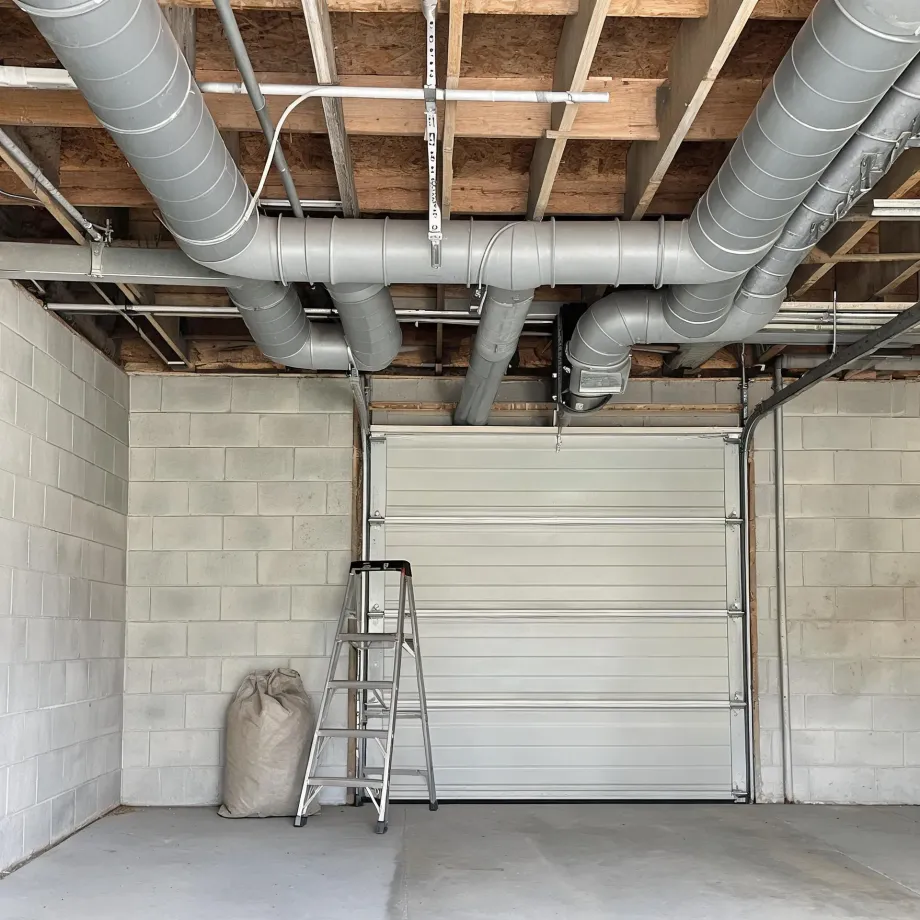
Existing ductwork is what a boiler installation turns on in a county where much of the housing was built around equipment that has since been replaced at least once. Half the homes in Cherokee County, South Carolina were built in 1984 or earlier (2020-2024 ACS 5-year). Ductwork laid in for an older system carries different dimensions and routing than what a new boiler's distribution requires, and a contractor has to open walls or crawl spaces to find out what is actually there before the new unit can be sized or placed. The electrical service in a house like this tells a similar story. What the panel was wired for and what the new equipment draws are questions answered on-site, not from a street address.
What a Boiler Installation Puts in Your Home
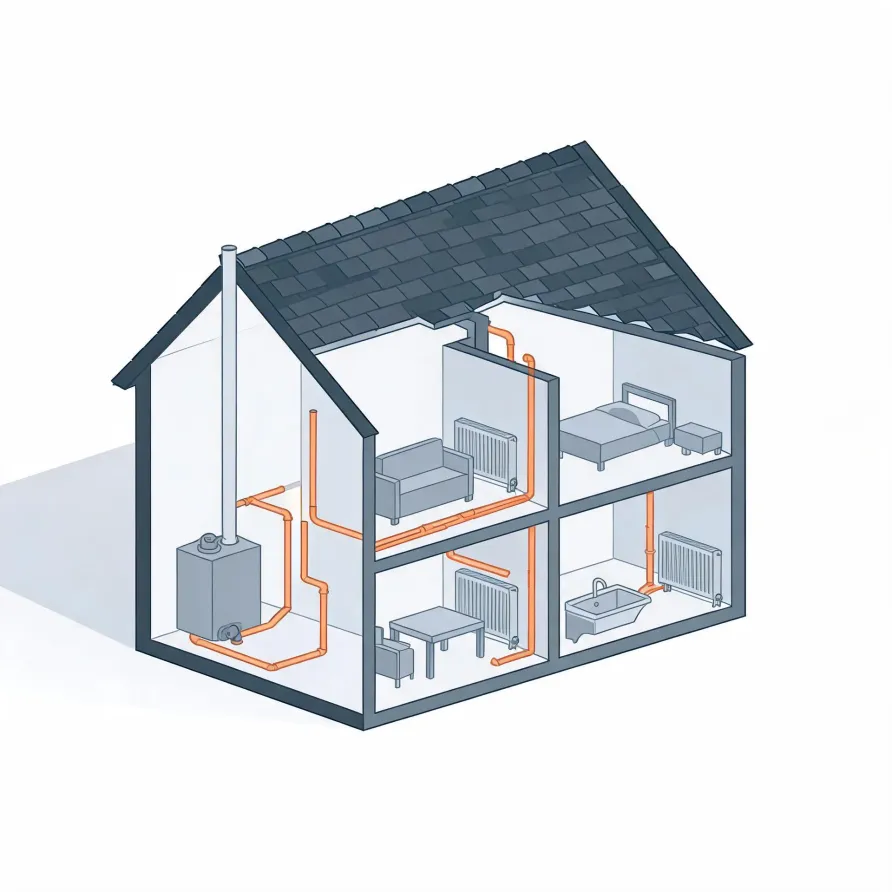
The boiler itself sits in a mechanical room, basement, or utility closet and is the heart of the system. It heats water and sends it out through pipes to radiators, baseboard units, or radiant floor loops placed throughout the living space. Each terminal unit gives off that heat into the room around it.
A circulator pump moves water through the pipe network, and an expansion tank sits nearby to absorb pressure changes as water heats and cools. A backflow preventer, pressure relief valve, and shutoff valves are also part of what a contractor puts in place to make the system safe and functional.
The drawing shows the general layout of a boiler system, and a licensed contractor determines exactly which components apply to this house.
Get matched in Cherokee CountyCherokee County, by the numbers
80 severe weather events were recorded in Cherokee County, South Carolina between 2015 and 2024.
NOAA National Centers for Environmental Information, Storm Events Database, bulk CSV export, events 2015-01-01 through 2024-12-31.Half the homes in Cherokee County, South Carolina were built in 1984 or earlier (2020-2024 ACS 5-year).
U.S. Census Bureau, 2020-2024 American Community Survey 5-Year EstimatesCherokee County, South Carolina holds 25,150 housing units (2020-2024 ACS 5-year).
U.S. Census Bureau, 2020-2024 American Community Survey 5-Year EstimatesOwners occupy 73.8% of the occupied homes in Cherokee County, South Carolina (2020-2024 ACS 5-year).
U.S. Census Bureau, 2020-2024 American Community Survey 5-Year EstimatesCodes & Standards Governing Boiler and HVAC Installation in Cherokee County, South Carolina1 sourced rules and standards
Licensing and Legal Requirements in Cherokee County, South Carolina
South Carolina requires a mechanical contractor license for contracting work whose total cost of construction is greater than ten thousand dollars.
Severe Weather Events in Cherokee County
Weather puts real load on heating equipment, and boilers in particular bear the strain of whatever conditions a local climate delivers year after year. How hard a system has to work, and how often, is a Cherokee County question before it is anything else.
80 severe weather events, 2015–2024. Source: NOAA National Centers for Environmental Information, Storm Events Database.