Tell us about the job
Takes about a minute. No obligation.
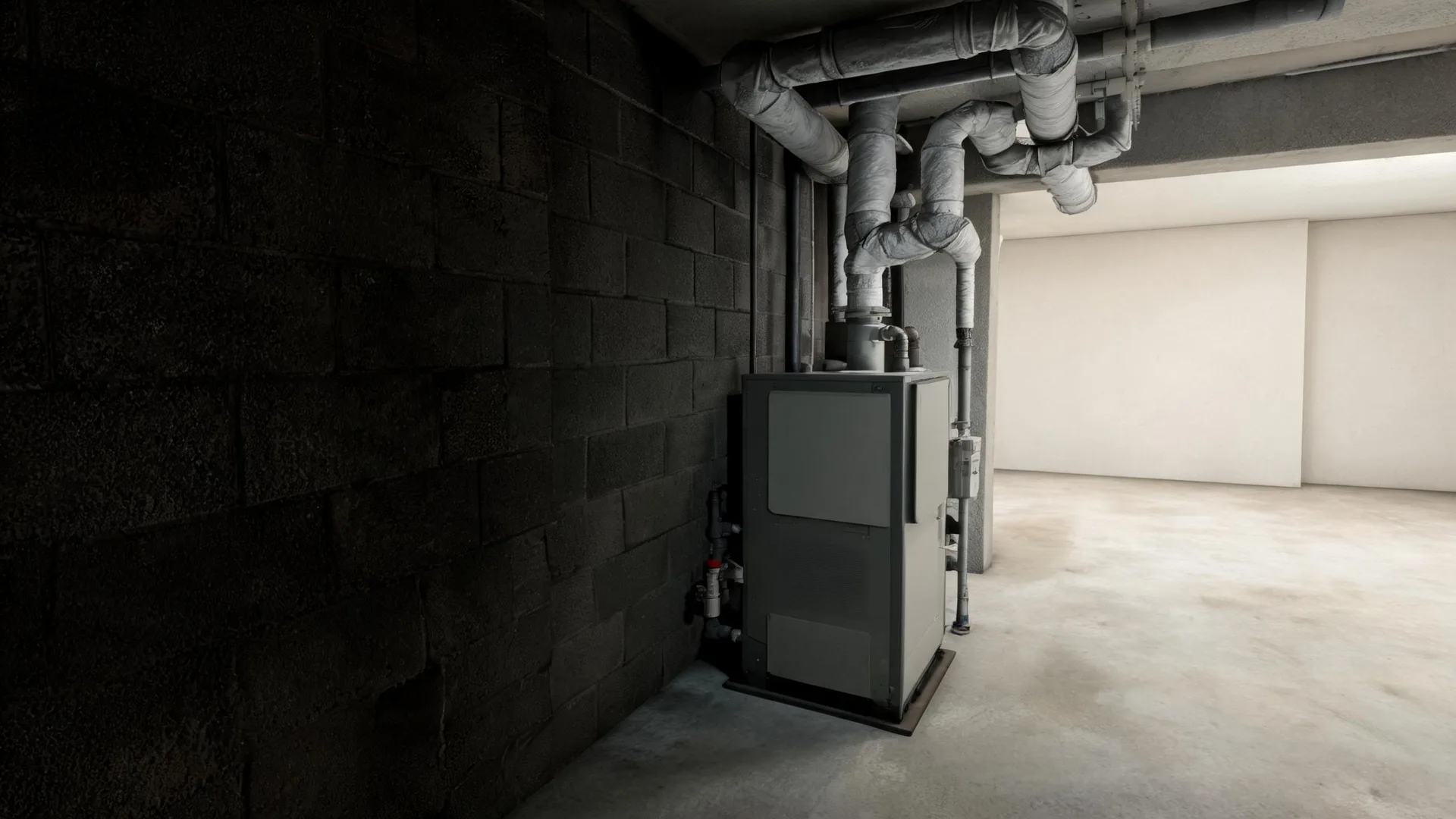
Sizing a boiler for a Lancaster County home requires a contractor to account for a genuine heating load, not a marginal one. Homes in Lancaster County, SC run heat about five months a year, from November through March. The burner and heat exchanger cycle through that whole stretch, and a unit that is undersized runs longer per call, accumulates wear faster, and stresses its ignition system in ways that a correctly sized installation does not. A contractor who skips a proper load calculation before quoting is gambling that the existing unit happened to be right.
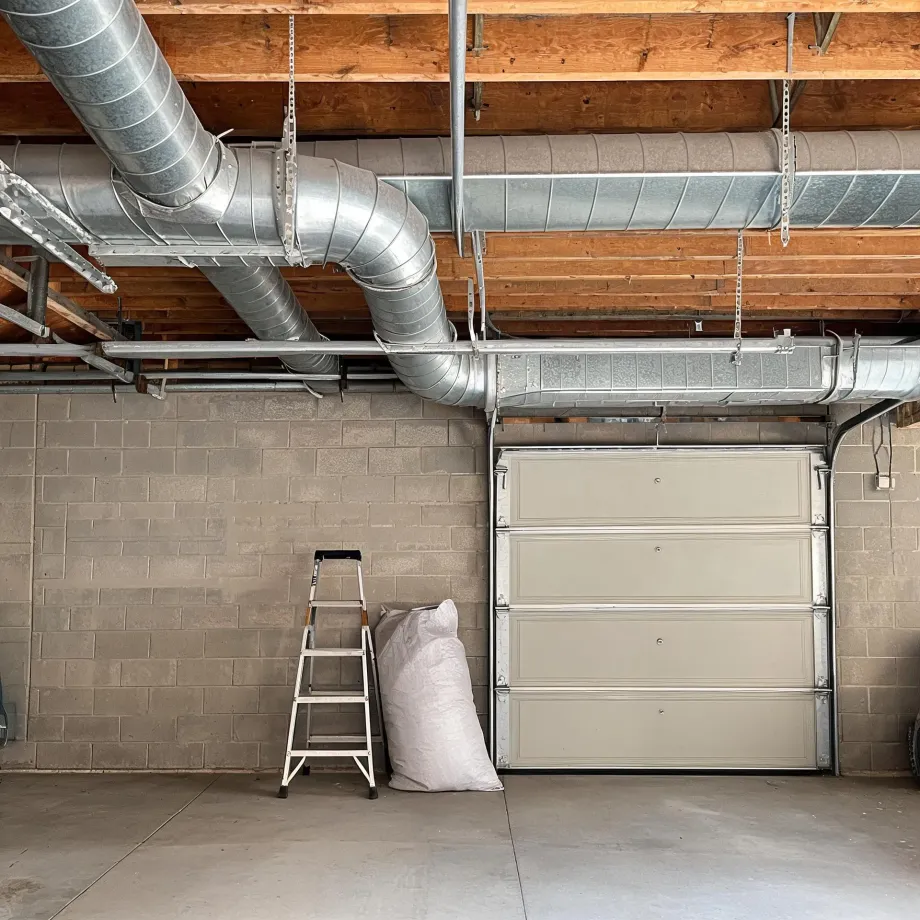
Ductwork is not the variable on a boiler installation, but the electrical service is. Half the homes in Lancaster County, South Carolina were built in 2000 or earlier (2020-2024 ACS 5-year). Housing built around that period was wired for loads that modern boiler systems, with their pumps, controls, and zone valves, regularly exceed. A contractor pricing a boiler job here checks the panel before pricing the equipment, because an undersized service panel turns a straightforward swap into a two-trade job.
What a Boiler Installation Covers
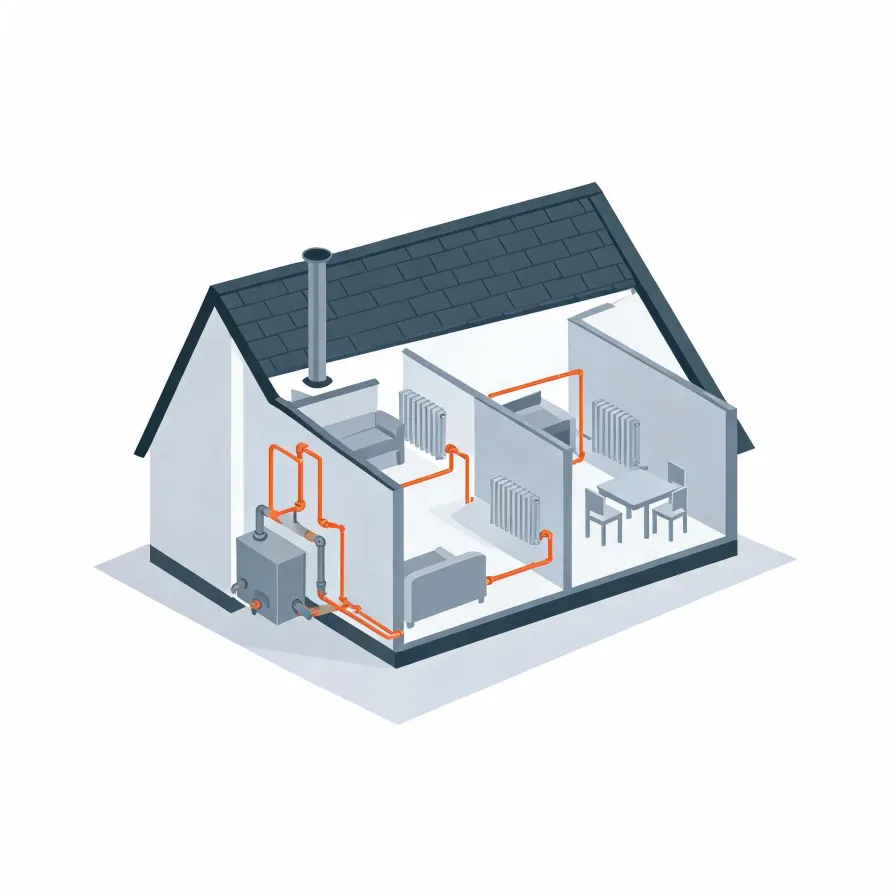
The boiler itself sits in a mechanical room, basement, or utility closet and is the piece that generates heat for the whole house. A contractor also installs the expansion tank, which absorbs pressure changes in the water as it heats and cools, and mounts it close to the boiler.
Radiators or radiant floor manifolds sit at the far end of the system, room by room, and receive the hot water the boiler sends out. The circulator pump, which drives that water through the pipes, mounts at or near the boiler alongside the zone valves that control which areas of the house receive heat.
The drawing shows a typical layout, and a licensed contractor determines what applies to this particular house.
Get matched in Lancaster CountyLancaster County, SC, by the numbers
191 severe weather events were recorded in Lancaster County, South Carolina between 2015 and 2024.
NOAA National Centers for Environmental Information, Storm Events Database, bulk CSV export, events 2015-01-01 through 2024-12-31.Half the homes in Lancaster County, South Carolina were built in 2000 or earlier (2020-2024 ACS 5-year).
U.S. Census Bureau, 2020-2024 American Community Survey 5-Year EstimatesLancaster County, South Carolina holds 43,832 housing units (2020-2024 ACS 5-year).
U.S. Census Bureau, 2020-2024 American Community Survey 5-Year EstimatesOwners occupy 83.3% of the occupied homes in Lancaster County, South Carolina (2020-2024 ACS 5-year).
U.S. Census Bureau, 2020-2024 American Community Survey 5-Year EstimatesBoiler Installation Rules for Lancaster County, South Carolina1 codes, standards, and laws
What Lancaster County, South Carolina Requires for HVAC Installation
South Carolina requires a mechanical contractor license for contracting work whose total cost of construction is greater than ten thousand dollars.
Severe Weather Events in Lancaster County
Weather in Lancaster County puts real demands on heating equipment. A boiler that handles whatever the local climate delivers needs to be sized and installed for this place, not a generic one.
191 severe weather events, 2015–2024. Source: NOAA National Centers for Environmental Information, Storm Events Database.