Tell us about the job
Takes about a minute. No obligation.
A boiler repair in Williamsburg County starts with a question a contractor has to answer before pricing the job: how much of the failure is a single fault, and how much is the heat exchanger, burner, or ignition system finally giving out after years of hard cycling. Homes in Williamsburg County, SC run heat about five months a year, from November through March. Burners and ignition components wear in proportion to how often they fire, and a system that has been cycling through cold months season after season shows that history in cracked heat exchangers, corroded electrodes, and ignition boards that start misfiring before they quit outright. A contractor who replaces only the obvious failed part without checking adjacent components hands the homeowner another repair call inside a year.
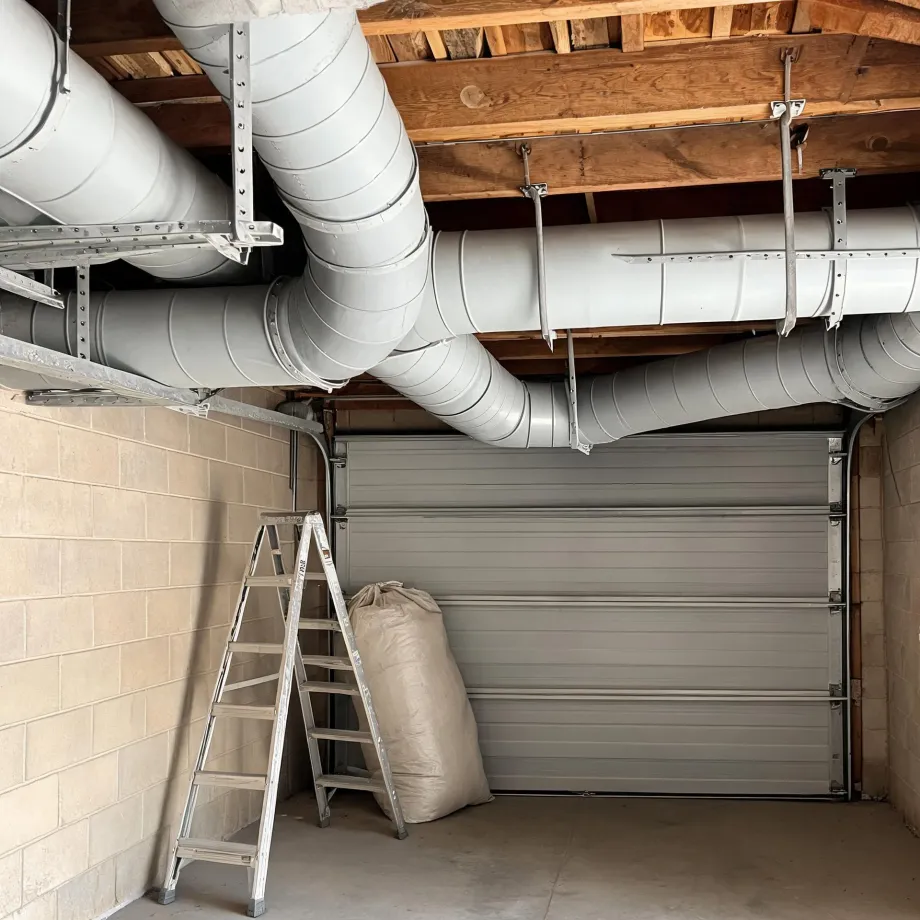
Piping and zone controls installed alongside a boiler that has long since been swapped out do not age on the same schedule as the replacement unit sitting in the mechanical room now. Half the homes in Williamsburg County, South Carolina were built in 1985 or earlier (2020-2024 ACS 5-year). That depth of history in the housing stock means a repair call on a boiler here can open into questions about what the distribution side has been doing in the years between original installation and today, which parts of that system are still sound, and whether a corroded zone valve or a failing expansion tank is what actually drove the complaint. The boiler a contractor opens is younger than the house around it. What feeds and surrounds that boiler often is not.
The Parts of a Boiler a Contractor Checks First
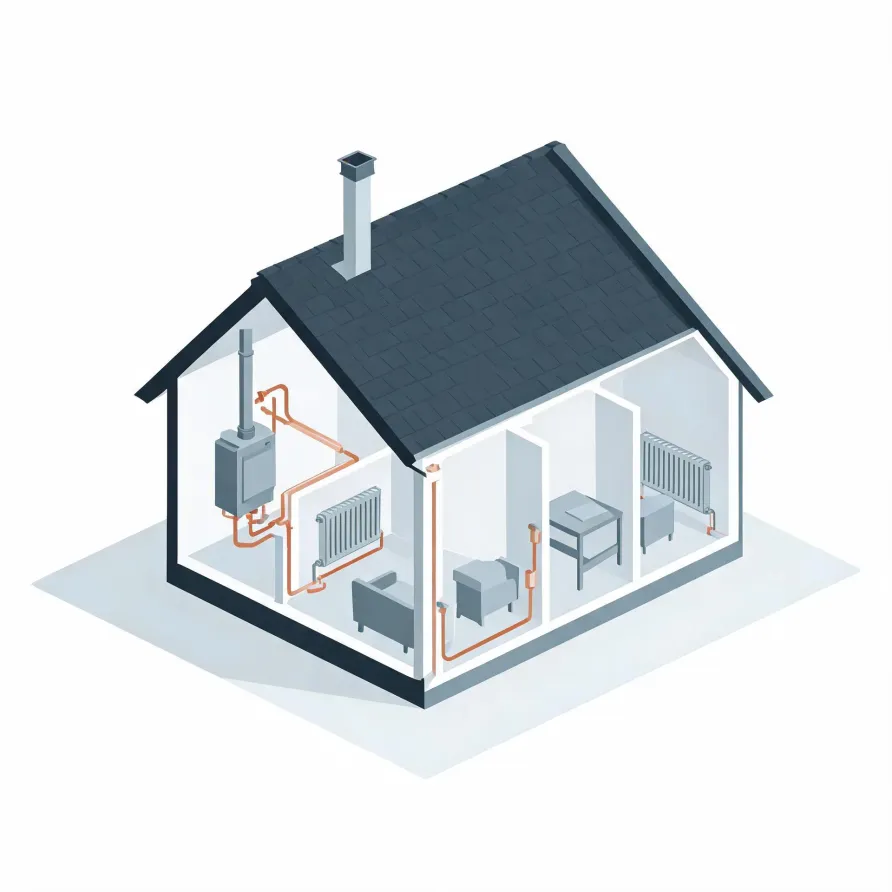
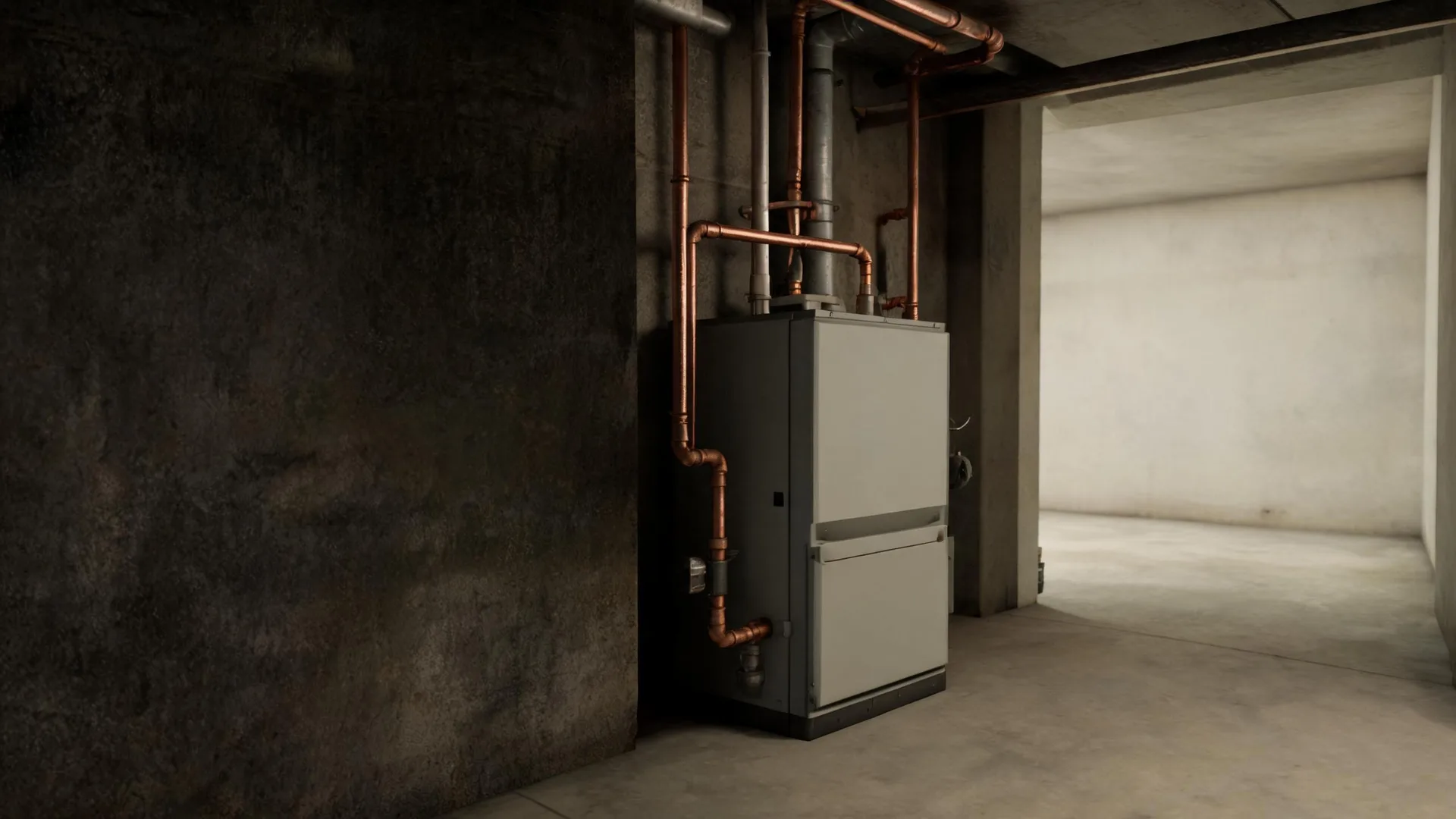
The boiler itself sits in a utility space, basement, or mechanical room and is the unit that heats water and pushes it through the system. When heat stops reaching a room or the system short-cycles, a contractor starts here, looking at the heat exchanger, the burner, and the controls that tell the unit when to fire.
From the boiler, supply pipes carry hot water to radiators or baseboard convectors mounted along the walls of each room, and return pipes bring the cooled water back. The circulator pump moves water through that loop, and the expansion tank and pressure relief valve sit close to the boiler to keep the system at a safe operating pressure. A fault in any of these can cut heat to part or all of the house.
The drawing shows a general layout of a boiler system, and a licensed contractor will determine which components apply and what condition they are in for your specific home.
Get matched in Williamsburg CountyWilliamsburg County, by the numbers
47 severe weather events were recorded in Williamsburg County, South Carolina between 2015 and 2024.
NOAA National Centers for Environmental Information, Storm Events Database, bulk CSV export, events 2015-01-01 through 2024-12-31.Half the homes in Williamsburg County, South Carolina were built in 1985 or earlier (2020-2024 ACS 5-year).
U.S. Census Bureau, 2020-2024 American Community Survey 5-Year EstimatesWilliamsburg County, South Carolina holds 14,907 housing units (2020-2024 ACS 5-year).
U.S. Census Bureau, 2020-2024 American Community Survey 5-Year EstimatesOwners occupy 76.4% of the occupied homes in Williamsburg County, South Carolina (2020-2024 ACS 5-year).
U.S. Census Bureau, 2020-2024 American Community Survey 5-Year EstimatesCodes & Standards Covering Boiler and HVAC Repair in Williamsburg County, South Carolina1 sourced rules and standards
Licensing and Legal Requirements in Williamsburg County, South Carolina
South Carolina requires a mechanical contractor license for contracting work whose total cost of construction is greater than ten thousand dollars.
Severe Weather Events in Williamsburg County
Extreme weather puts real strain on heating equipment, from hard freezes that push boilers past their rated load to sudden temperature swings that accelerate wear on seals and controls. How much of that stress a boiler absorbs depends largely on where it runs, and Williamsburg County has its own weather record.
47 severe weather events, 2015–2024. Source: NOAA National Centers for Environmental Information, Storm Events Database.