Tell us about the job
Takes about a minute. No obligation.
A boiler repair diagnosis starts with what the burner, heat exchanger, and ignition system have already been through. Homes in Oconee County, SC run heat about seven months a year, from October through April. By the time a boiler shows a fault, those components have cycled through months of cold-weather demand, and the failure a contractor finds is usually the result of accumulated stress on specific parts rather than a single event. Ignition assemblies and heat exchanger seals are where contractors look first, because they carry the load every time the boiler fires.
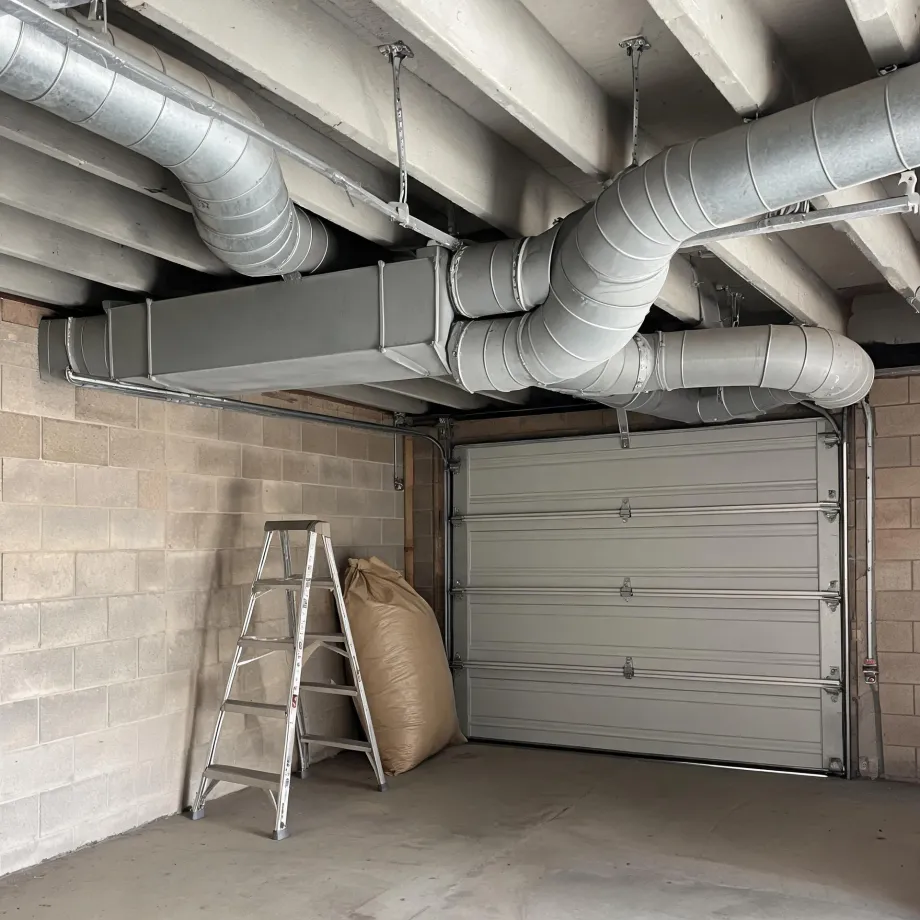
Boilers in housing this old are running on components whose replacement parts are no longer in standard supply chains, and that gap shows up the moment a contractor opens the unit. Half the homes in Oconee County, South Carolina were built in 1990 or earlier (2020-2024 ACS 5-year). A heat exchanger or zone control assembly from that era may have no direct equivalent on the shelf today, which pushes a contractor to source substitutes, fabricate a workaround, or present the homeowner with a scope that was not obvious from the outside. That determination cannot be made from the serial plate alone.
The Parts of a Boiler a Contractor Checks First
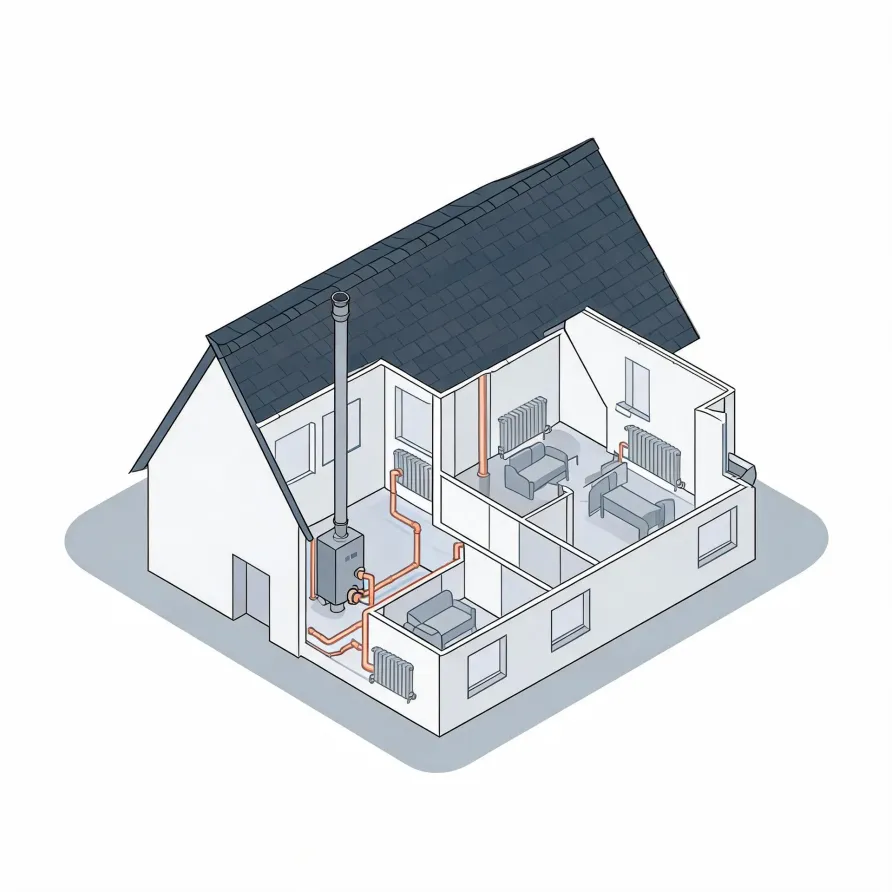
The boiler itself sits in a mechanical room, basement, or utility closet and is the piece a contractor goes to first. It houses the burner, the heat exchanger, and the controls that govern the whole system. When heat stops arriving at the radiators or the pressure gauge reads wrong, the fault usually starts here.
Radiators or baseboard convectors sit in each room and are what the homeowner notices when something is off. Connecting them to the boiler are supply and return pipes that carry hot water through the house. The circulator pump, which keeps that water moving, and the expansion tank, which manages pressure, are the other components a contractor examines when the boiler itself checks out.
The drawing shows a general layout of these components, and a licensed contractor determines what applies to the specific system in your home.
Get matched in Oconee CountyOconee County, by the numbers
136 severe weather events were recorded in Oconee County, South Carolina between 2015 and 2024.
NOAA National Centers for Environmental Information, Storm Events Database, bulk CSV export, events 2015-01-01 through 2024-12-31.Half the homes in Oconee County, South Carolina were built in 1990 or earlier (2020-2024 ACS 5-year).
U.S. Census Bureau, 2020-2024 American Community Survey 5-Year EstimatesOconee County, South Carolina holds 42,100 housing units (2020-2024 ACS 5-year).
U.S. Census Bureau, 2020-2024 American Community Survey 5-Year EstimatesOwners occupy 76.2% of the occupied homes in Oconee County, South Carolina (2020-2024 ACS 5-year).
U.S. Census Bureau, 2020-2024 American Community Survey 5-Year EstimatesCodes & Standards Governing Boiler and HVAC Repair in Oconee County, South Carolina1 sourced rules and standards
Licensing Rules for HVAC Repair in Oconee County, South Carolina
South Carolina requires a mechanical contractor license for contracting work whose total cost of construction is greater than ten thousand dollars.
Severe Weather Events in Oconee County
Weather puts hours on heating equipment. Each storm cycle that pushes a boiler through hard starts, pressure swings, and recovery loads is a repair risk, and how often that happens here shapes what local boilers actually go through.
136 severe weather events, 2015–2024. Source: NOAA National Centers for Environmental Information, Storm Events Database.