Tell us about the job
Takes about a minute. No obligation.
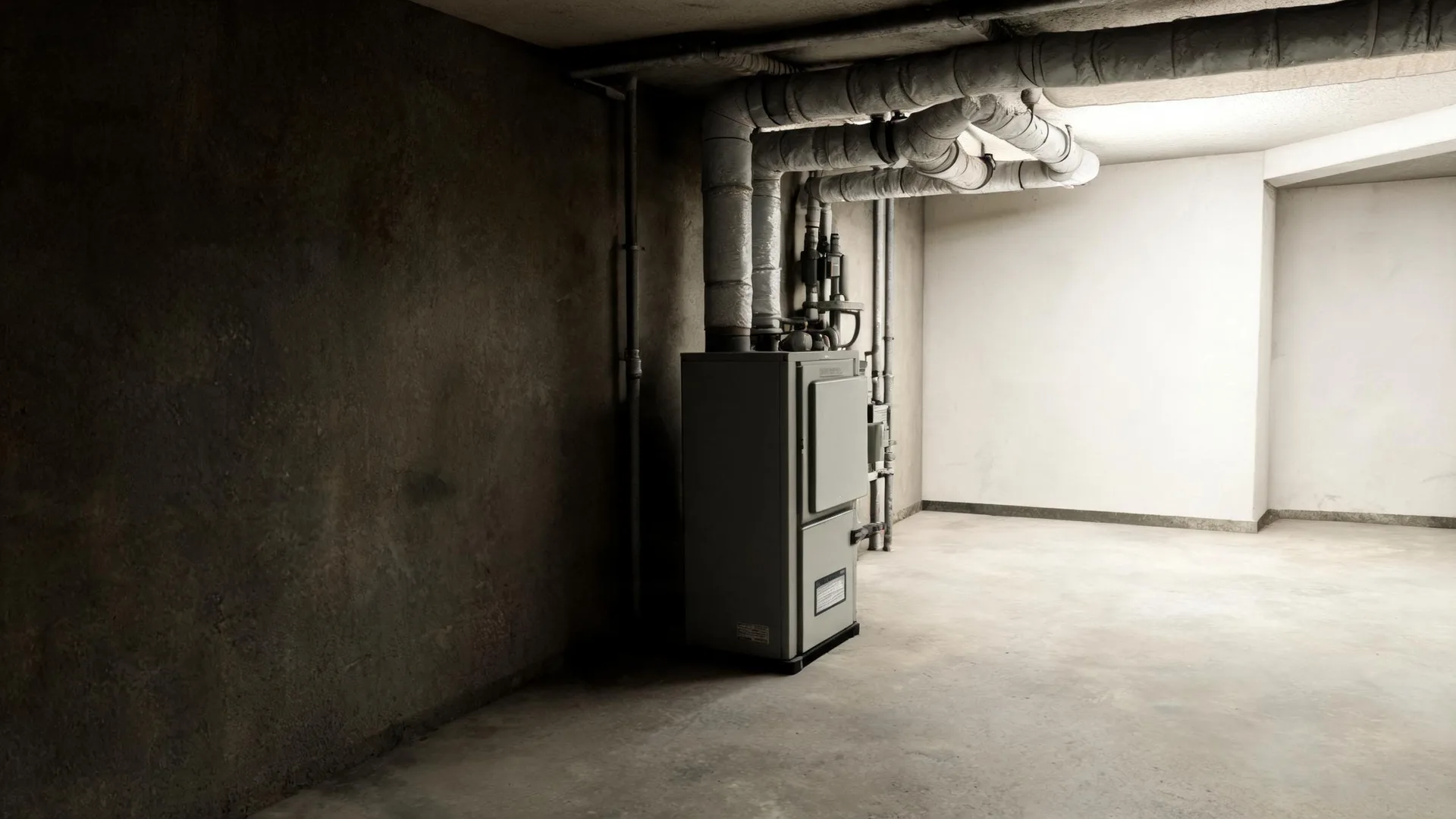
A boiler sitting idle through a long warm stretch does not stop aging. Homes in Dorchester County, SC run heat about five months a year, from November through March. The heat exchanger and burner assembly cycle hard through those months, then stand off in humid lowcountry air, where scale builds and seals dry out. By the time a homeowner fires the system up in November, a fitting that was marginal in March has had months to worsen. A contractor diagnosing a no-heat call here checks for that kind of seasonal deterioration before pricing parts, because a combustion fault that showed up on day one of the season usually started long before day one.
Half the homes in Dorchester County, South Carolina were built in 2000 or earlier (2020-2024 ACS 5-year). Stock that recent was built alongside the systems running in it, which means the building itself is unlikely to be where a boiler repair gets complicated. What a contractor finds once the unit is open determines the job: whether the heat exchanger has cracked, whether the circulator pump has seized, whether the controls are still serviceable. Those answers come from the boiler, and a quote that attributes the diagnosis to the age of the house is skipping past the part that decides it.
The Parts of a Boiler a Contractor Checks First
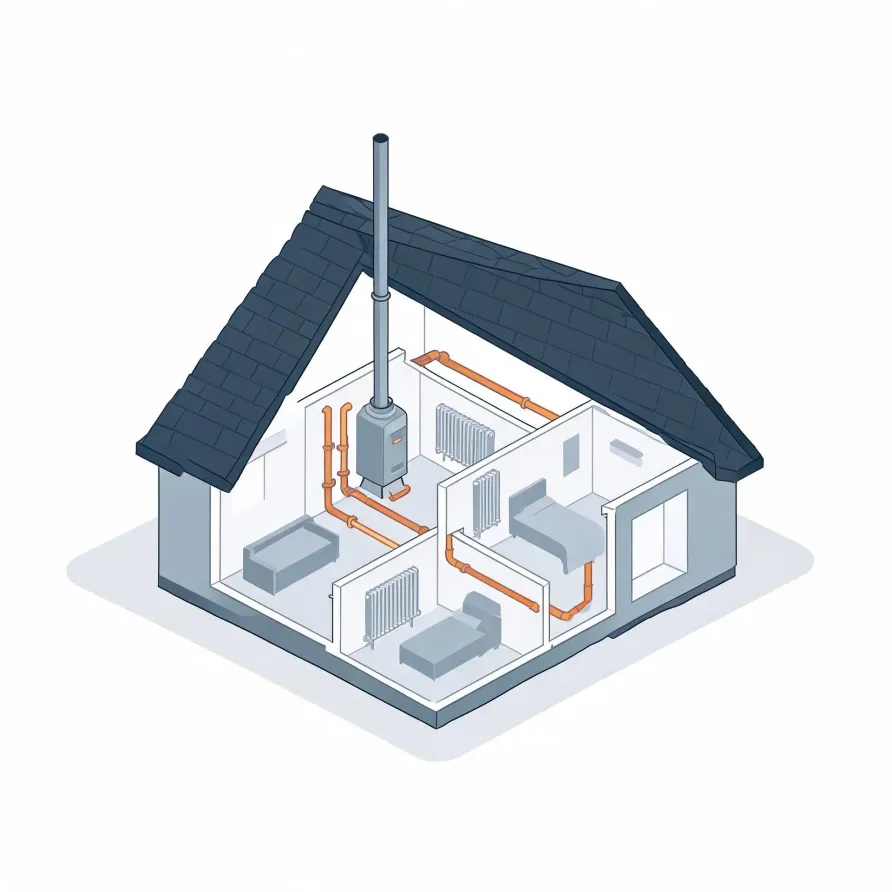
The boiler itself sits in the basement or utility room and is the heart of the system. It heats water and pushes it out to the rest of the house. When a home loses heat or the system short-cycles, the burner assembly, heat exchanger, and pressure relief valve are the pieces a contractor looks at first.
From the boiler, pipes carry hot water to radiators or baseboard units positioned along exterior walls and under windows throughout the house. The circulator pump moves water through that loop, and the expansion tank nearby absorbs pressure changes as the water heats. A failed pump or a waterlogged expansion tank both stop heat from reaching the rooms, so a contractor checks each one when the boiler runs but the house stays cold.
The drawing shows the general layout of a boiler system, and a licensed contractor determines which components apply to your specific home.
Get matched in Dorchester CountyDorchester County, by the numbers
290 severe weather events were recorded in Dorchester County, South Carolina between 2015 and 2024.
NOAA National Centers for Environmental Information, Storm Events Database, bulk CSV export, events 2015-01-01 through 2024-12-31.Half the homes in Dorchester County, South Carolina were built in 2000 or earlier (2020-2024 ACS 5-year).
U.S. Census Bureau, 2020-2024 American Community Survey 5-Year EstimatesDorchester County, South Carolina holds 67,865 housing units (2020-2024 ACS 5-year).
U.S. Census Bureau, 2020-2024 American Community Survey 5-Year EstimatesOwners occupy 75.5% of the occupied homes in Dorchester County, South Carolina (2020-2024 ACS 5-year).
U.S. Census Bureau, 2020-2024 American Community Survey 5-Year EstimatesBoiler Repair Rules and Standards on Record for Dorchester County, South Carolina1 codes, laws, and standards
Licensing and Legal Requirements in Dorchester County, South Carolina
South Carolina requires a mechanical contractor license for contracting work whose total cost of construction is greater than ten thousand dollars.
Severe Weather Events in Dorchester County
Boilers take on extra strain when outdoor conditions push hard against a home's envelope. How much that happens in Dorchester County shapes how often the equipment needs attention, which makes local weather history a practical baseline for boiler repair work.
290 severe weather events, 2015–2024. Source: NOAA National Centers for Environmental Information, Storm Events Database.