Tell us about the job
Takes about a minute. No obligation.
Sizing a boiler for a Greenville County home means accounting for how steadily that burner cycles from fall through spring. Homes in Greenville County, SC run heat about seven months a year, from October through April. The heat exchanger, the ignition system, and the circulator all accumulate wear through that stretch, and a system that was undersized or improperly commissioned at install has little idle time to mask the problem. A contractor calculating the load here has to work from the actual envelope of the house, not a rule-of-thumb figure, because the margin between a correctly sized boiler and an overworked one closes when the burner stays on that long.
Electrical service panels in houses of this vintage were sized for what equipment drew at the time they were built. A new boiler can land on a circuit that needs upgrading before the unit ever fires. Half the homes in Greenville County, South Carolina were built in 1992 or earlier (2020-2024 ACS 5-year). A contractor quoting a boiler installation here opens the panel before pricing the job, because the load the new equipment requires and what the existing wiring can carry are two different numbers that have to be reconciled first.
What a Boiler Installation Puts in Your Home
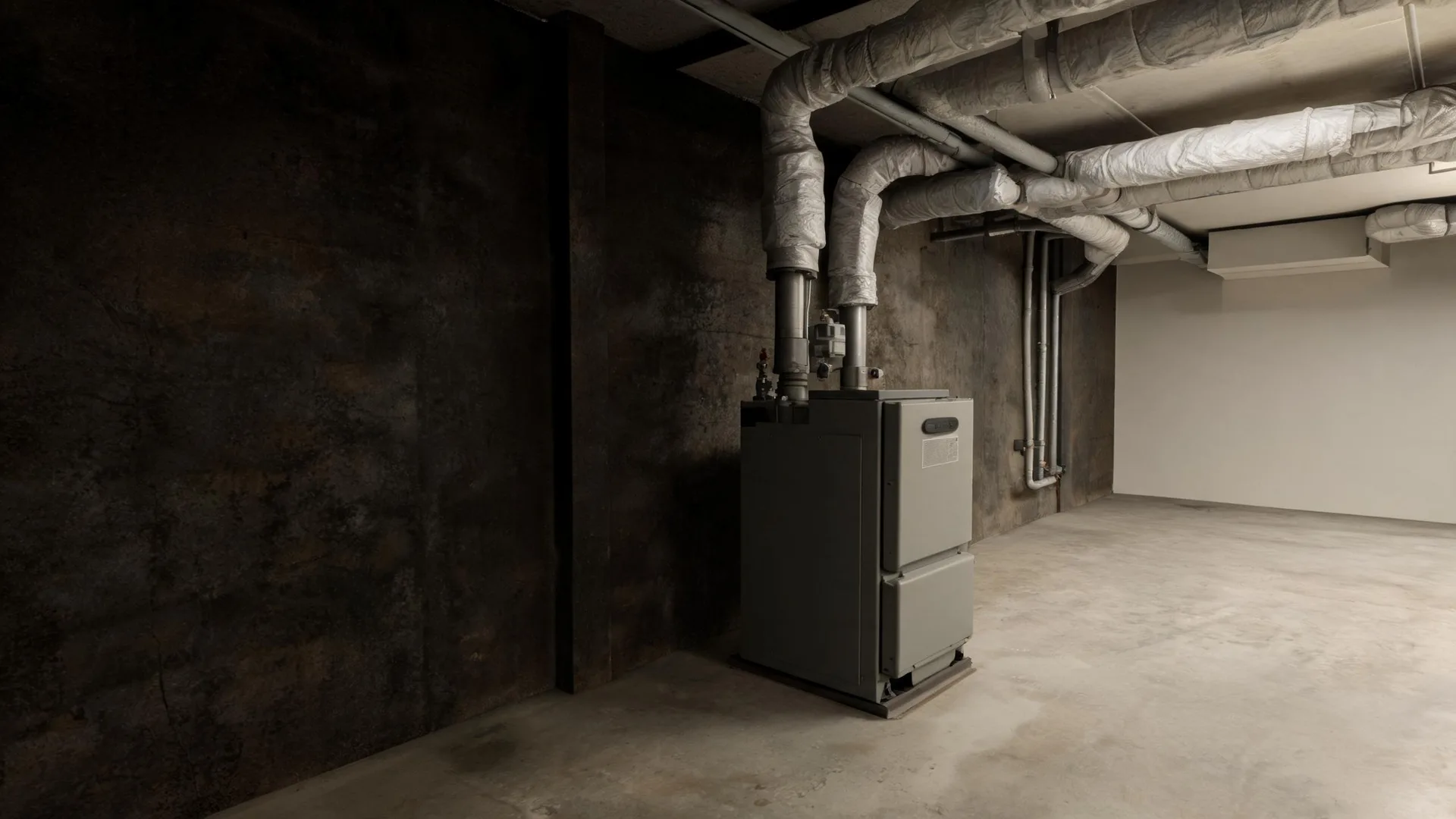
The boiler itself sits in a mechanical room, basement, or utility closet and is the unit that heats water for the whole system. Wall-mounted or floor-standing depending on the house, it is the central piece every other part connects to. A contractor sets it in place, connects it to the fuel supply, and ties it into the rest of the system.
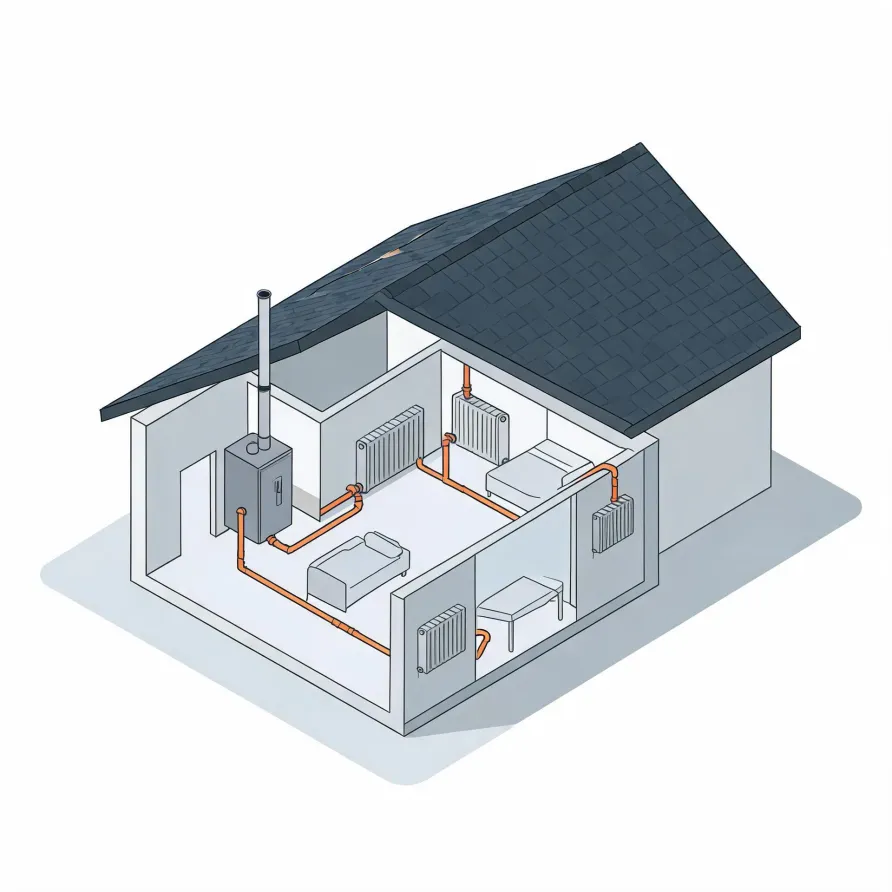
From the boiler, supply pipes run through the house to the heat emitters, which are radiators or radiant panels in the floors or walls depending on what the installation calls for. A circulator pump moves the heated water through those pipes, and an expansion tank sits nearby to absorb pressure changes as the water heats and cools. The thermostat, mounted on a wall, is what the homeowner uses to set temperatures and signal the boiler to fire.
The drawing alongside shows the general layout of a boiler system, and a licensed contractor determines exactly what applies to this house.
Get matched in Greenville CountyGreenville County, by the numbers
215 severe weather events were recorded in Greenville County, South Carolina between 2015 and 2024.
NOAA National Centers for Environmental Information, Storm Events Database, bulk CSV export, events 2015-01-01 through 2024-12-31.Half the homes in Greenville County, South Carolina were built in 1992 or earlier (2020-2024 ACS 5-year).
U.S. Census Bureau, 2020-2024 American Community Survey 5-Year EstimatesGreenville County, South Carolina holds 238,260 housing units (2020-2024 ACS 5-year).
U.S. Census Bureau, 2020-2024 American Community Survey 5-Year EstimatesOwners occupy 68.9% of the occupied homes in Greenville County, South Carolina (2020-2024 ACS 5-year).
U.S. Census Bureau, 2020-2024 American Community Survey 5-Year EstimatesBoiler Installation Rules & Codes for Greenville County, South Carolina1 sourced rules and standards
Licensing and Legal Requirements in Greenville County, South Carolina
South Carolina requires a mechanical contractor license for contracting work whose total cost of construction is greater than ten thousand dollars.
Severe Weather Events in Greenville County
Greenville County's climate puts real demands on heating equipment over time. A boiler sized and installed for local conditions holds up better than one spec'd for somewhere else.
215 severe weather events, 2015–2024. Source: NOAA National Centers for Environmental Information, Storm Events Database.